Comparison · 13 min read
Toyota RAV4 vs Subaru Outback: Which SUV Is Better for 2026?
The 2026 RAV4 starts at $31,900 as a hybrid-only compact SUV; the redesigned Outback starts at $34,995 as a midsize SUV with standard AWD. A full spec-by-spec comparison of price, mpg, cargo and safety.
By Raza ·
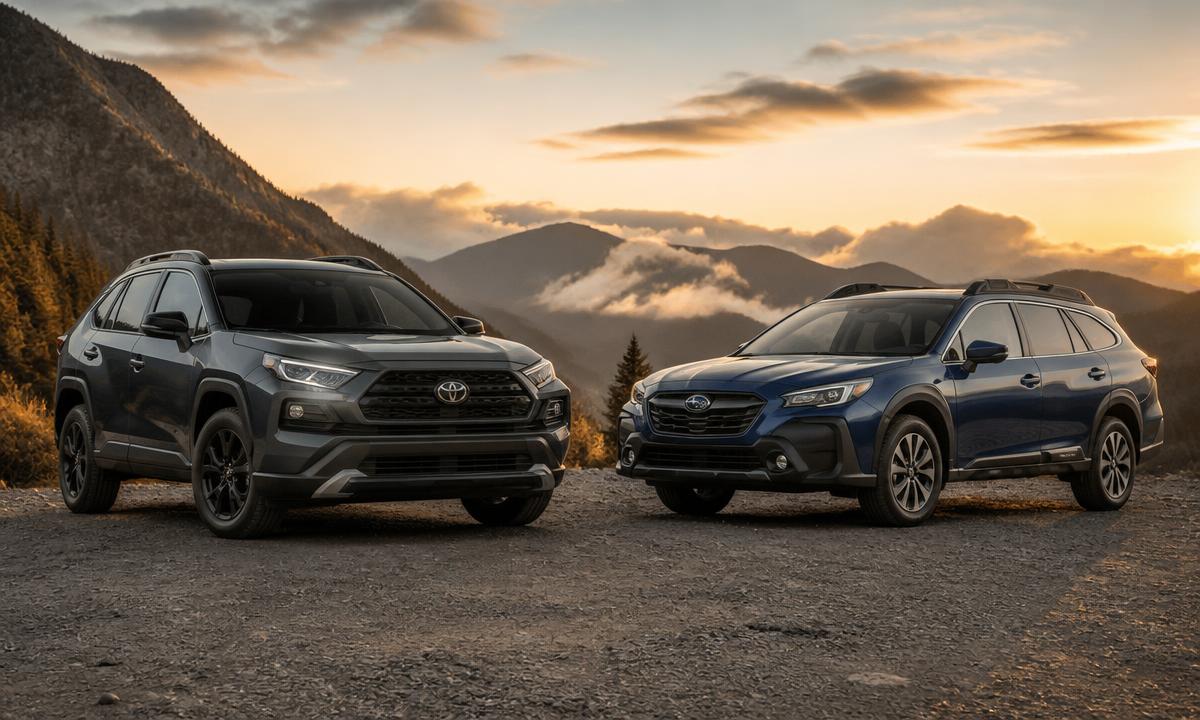
For twenty years these two cars sat in roughly the same place in people's heads: sensible, all-weather, good for a dog and a bike rack. For 2026 they stopped agreeing about almost everything. Toyota pulled the gas engine out of the RAV4 entirely. Subaru pushed the Outback up a size class and left it on petrol. What used to be a coin flip between two similar cars is now a choice between two different arguments about what a family SUV should be.
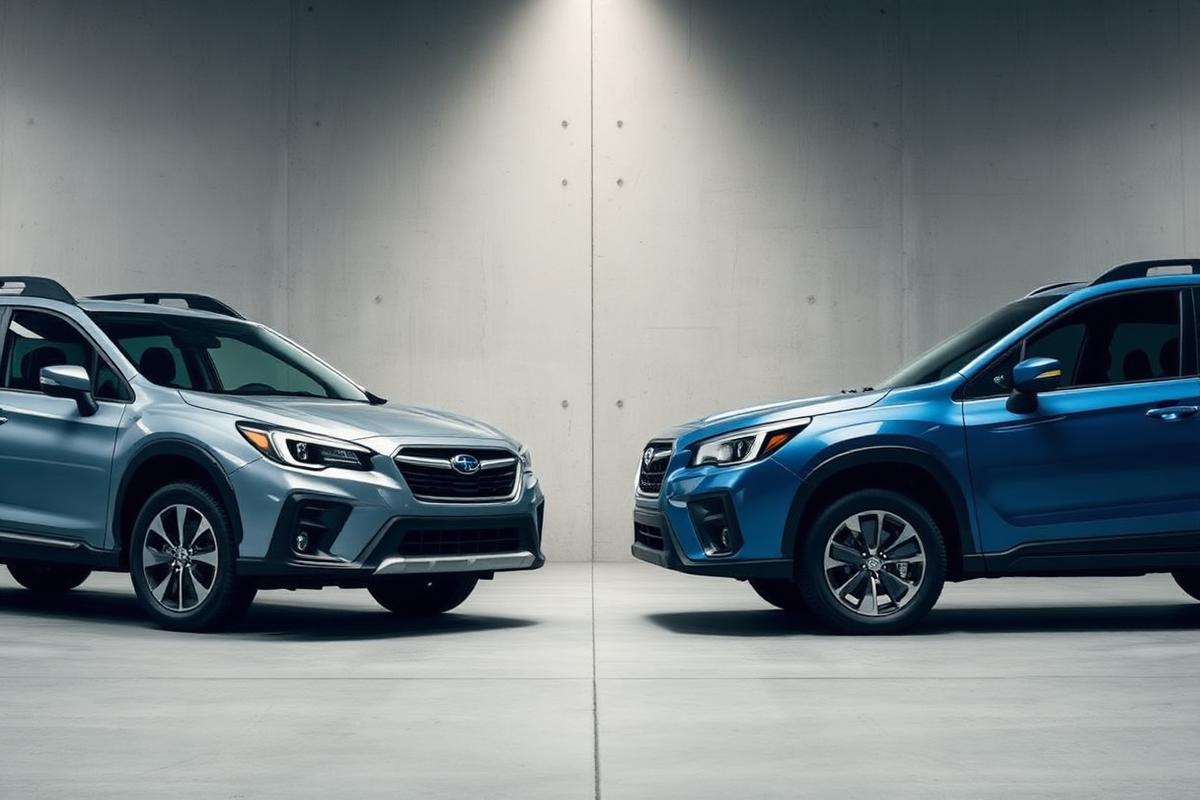
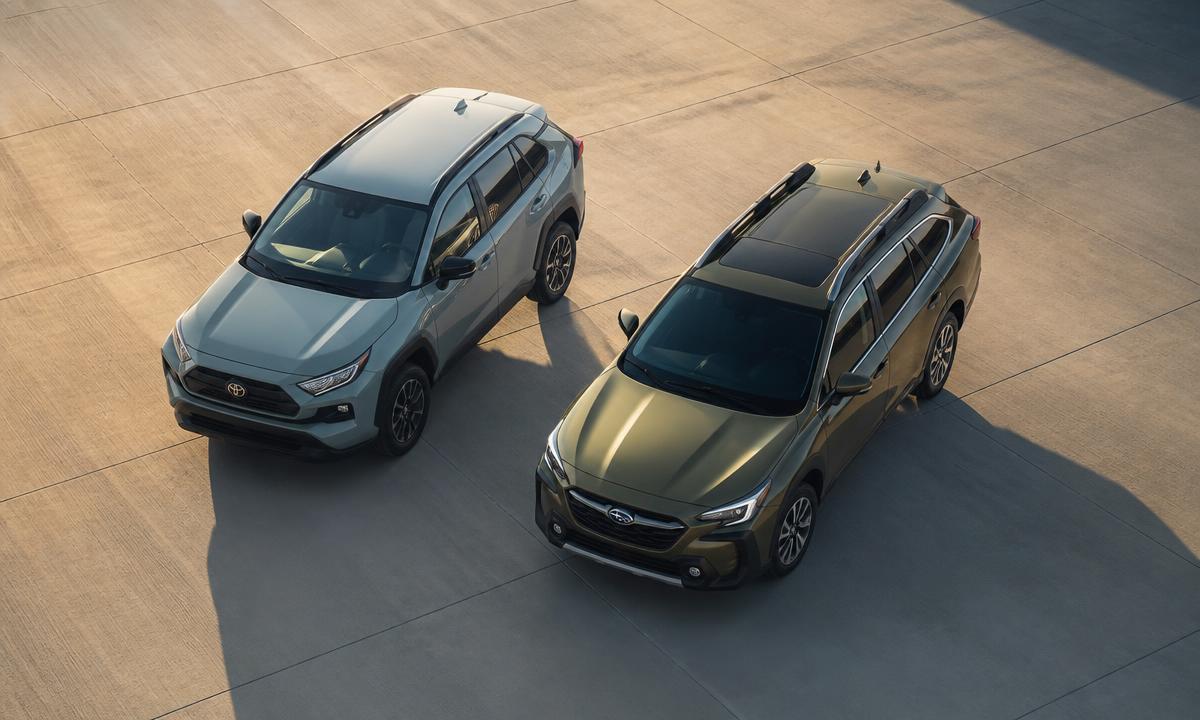
The 2026 Toyota RAV4 starts at $31,900 and is a compact SUV sold only as a hybrid or plug-in hybrid. The redesigned 2026 Subaru Outback starts at $34,995 and is now a midsize SUV with standard all-wheel drive and gasoline engines only. The RAV4 leads on fuel economy and entry price. The Outback leads on interior space, towing and off-road hardware.
2026 Toyota RAV4 vs Subaru Outback: Quick Comparison
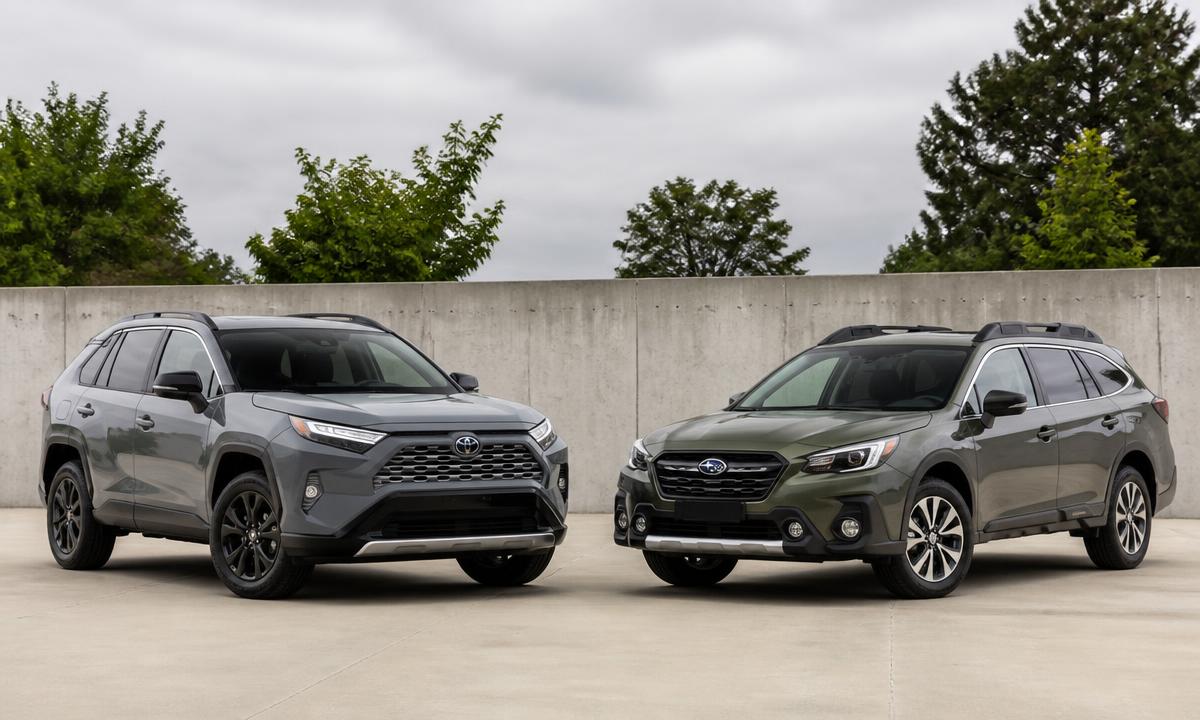
Prices below exclude destination charges, which add $1,450 on the Outback and a similar amount on the RAV4. All figures were verified against manufacturer and IIHS sources on 3 September 2026.
| Spec | 2026 Toyota RAV4 | 2026 Subaru Outback |
|---|---|---|
| Starting MSRP | $31,900 (LE front-wheel drive) | $34,995 (Premium) |
| Vehicle class | Compact SUV | Midsize SUV |
| Powertrain | 2.5-liter hybrid standard, 2.5-liter plug-in hybrid available, no gas-only option | 2.5-liter Boxer standard, 2.4-liter turbo Boxer on XT and Wilderness |
| EPA mpg, entry trim | 47 city / 40 highway / 43 combined | 25 city / 31 highway / 27 combined |
| Horsepower | 226 (FWD hybrid), 236 (AWD hybrid), 324 (plug-in hybrid) | 180 (2.5-liter), 260 (2.4-liter turbo) |
| All-wheel drive | Available on most trims, standard on Woodland and every plug-in hybrid | Standard on all six trims |
| Cargo behind rear seats | 37.8 cu ft | 34.6 cu ft |
| Maximum cargo | 70.4 cu ft | 80.5 cu ft |
| Ground clearance | 8.1 in, 8.5 in on Woodland | 8.7 in, 9.5 in on Wilderness |
| Maximum towing | 3,500 lb on properly equipped AWD trims, 1,750 lb on FWD and LE AWD | 3,500 lb with the turbo engine, 2,700 lb with the 2.5-liter |
| Plug-in hybrid offered | Yes, from about $41,500 | No |
Sources: Toyota, Subaru, Kelley Blue Book.
What Is the Difference Between the 2026 RAV4 and Outback?
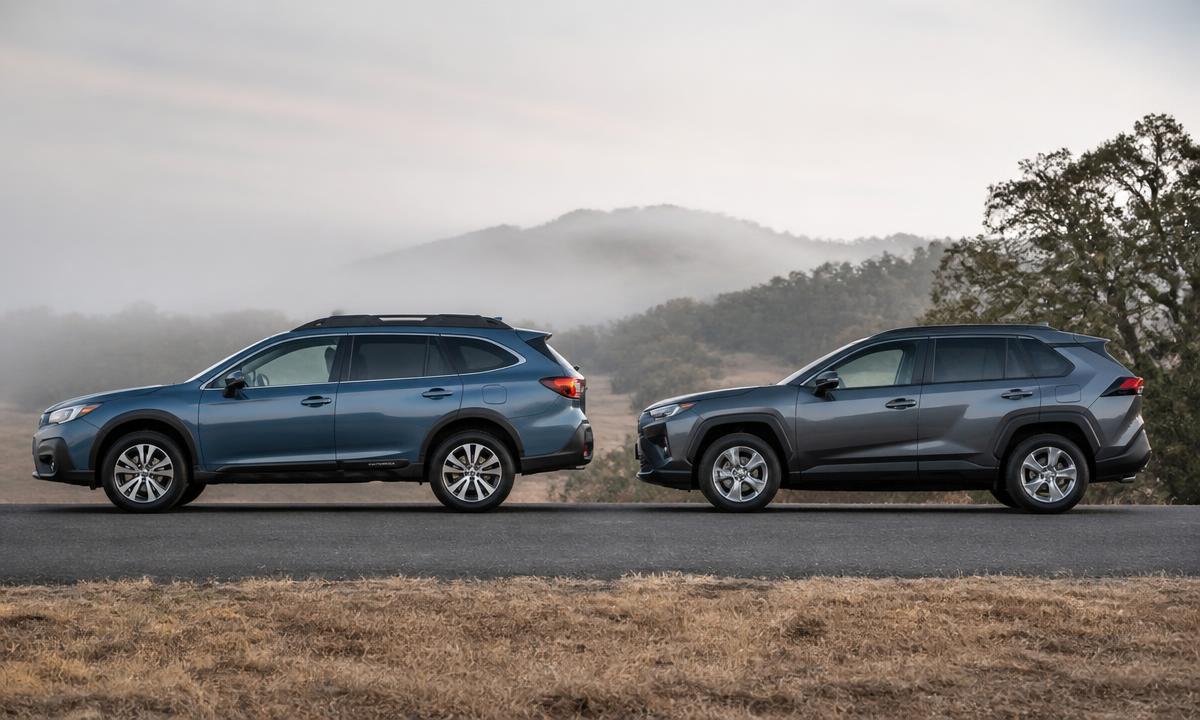
The two are no longer the same size of vehicle. The RAV4 remains a compact SUV in its sixth generation, while the Outback moved up a class with its seventh-generation redesign and is now classified by the IIHS as a midsize SUV. Subaru kept the wheelbase close to the old car but made the body taller and boxier, which is where the extra passenger and cargo volume comes from.
The powertrain strategies diverge just as sharply. Toyota dropped the gas-only RAV4 for 2026, so every trim is a hybrid or a plug-in hybrid. Subaru went the other way and kept the Outback on gasoline power, with a 180-horsepower 2.5-liter Boxer as standard and a 260-horsepower 2.4-liter turbo Boxer on the Limited XT, Touring XT and Wilderness. There is no hybrid or plug-in Outback for 2026. That single decision explains most of the fuel-economy gap, and it is the first thing to settle before comparing anything else.
Toyota electrified the entire RAV4 range. Subaru grew the Outback a size and kept it on petrol. Nearly every other number in this comparison is downstream of those two decisions.
RAV4 vs Outback: Which One Is Bigger?
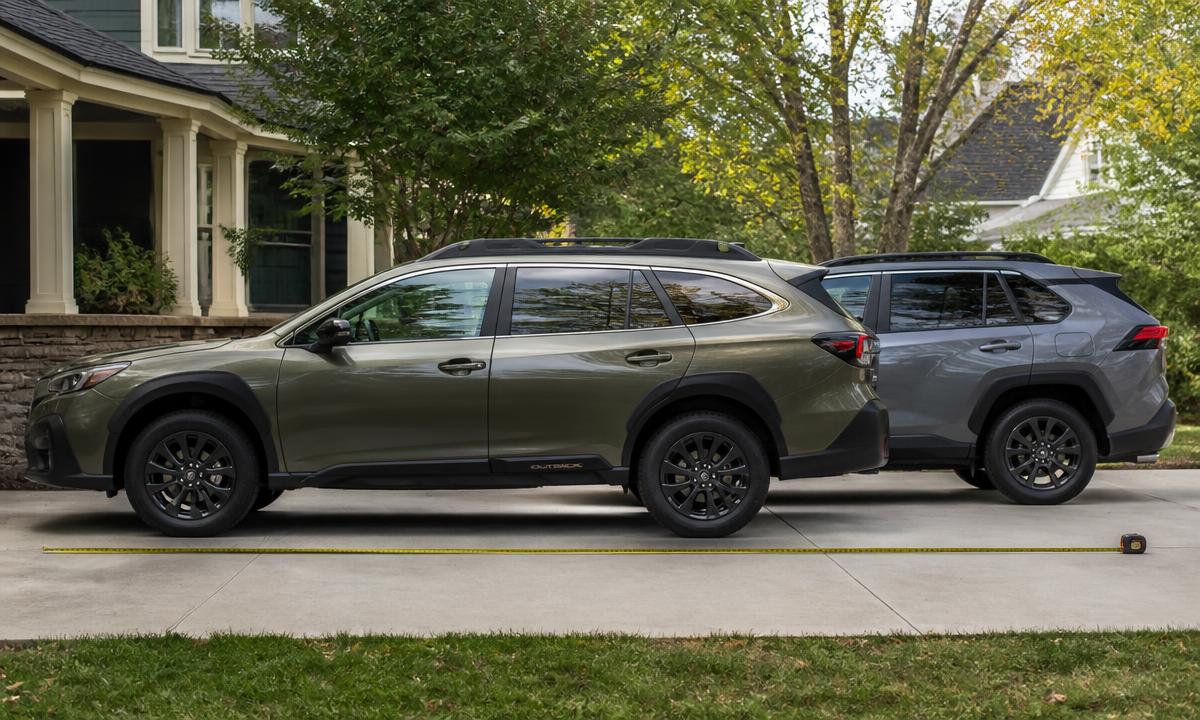
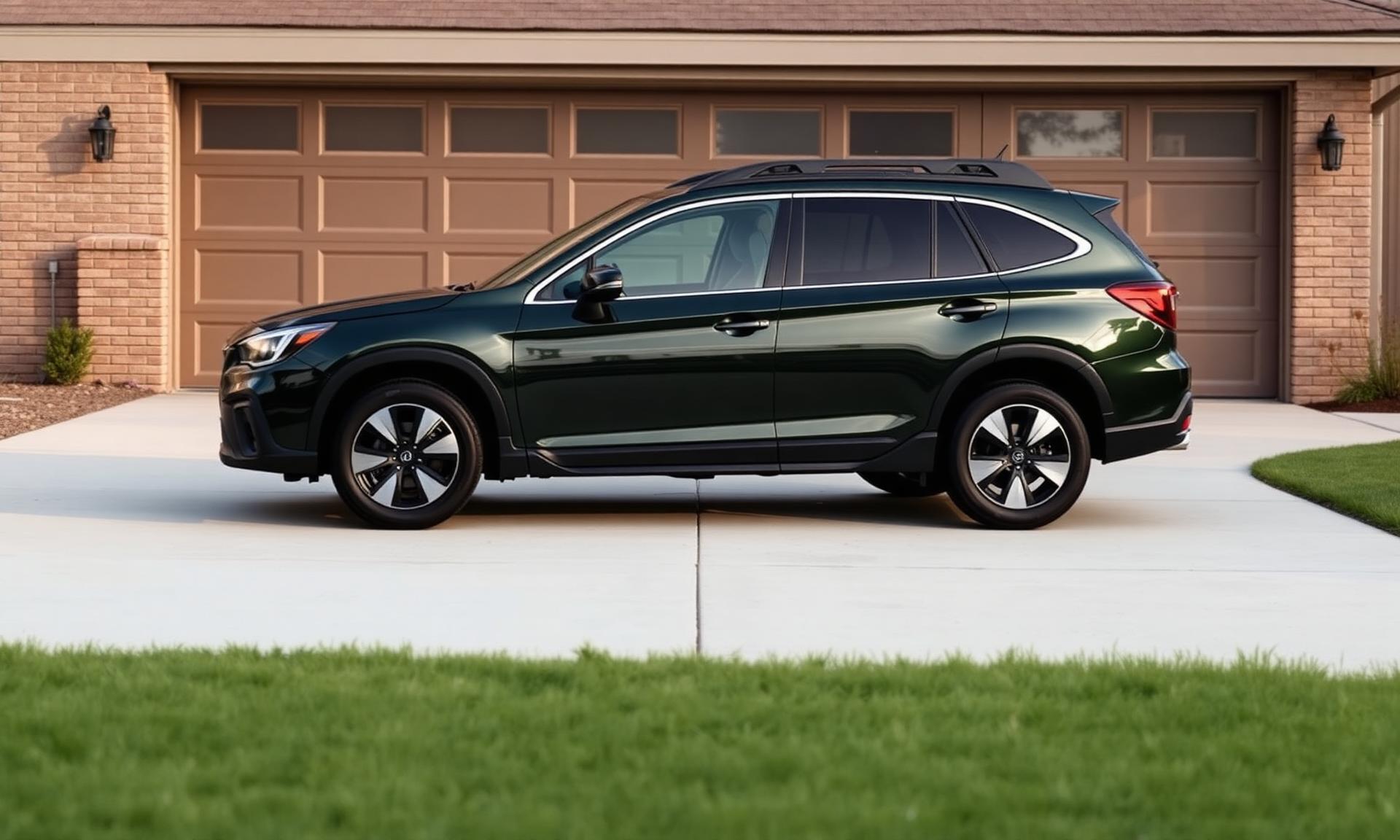
The Outback is the larger vehicle. It measures 191.7 inches long on a 108.1-inch wheelbase and stands 68.3 inches tall, against roughly 181 inches of length, a 105.9-inch wheelbase and about 66.7 inches of height for the RAV4. That is close to 11 inches of extra length, and it shows up in rear legroom and maximum cargo volume rather than in everyday drivability. Both still fit a standard garage and a normal parking space without drama.
RAV4 vs Outback Price and Value
The RAV4 undercuts the Outback by about $3,100 at the entry point, $31,900 against $34,995 before destination. The gap narrows once you look at what each price buys. Every Outback trim includes Symmetrical All-Wheel Drive, a 12.1-inch touchscreen, a 12.3-inch digital gauge cluster and at least 8.7 inches of ground clearance, so the entry-level Premium arrives better equipped than its price suggests. The RAV4's counter-argument is that its cheapest trim is already a hybrid, so the fuel economy does not require moving up the lineup.
Both lineups spread wide at the top. Subaru's ladder runs from the $34,995 Premium through the Limited at $41,715, the Limited XT at $44,365, the Wilderness at $44,995 and the Touring at $45,395, topping out with the Touring XT at $47,995. Toyota's hybrids run from $31,900 to $43,300 for the Limited, and the plug-in hybrids start near $41,500 and reach roughly $48,500. Neither model is heavily discounted this early in its life, so budget close to sticker.
Which Is Cheaper, the RAV4 or the Outback?
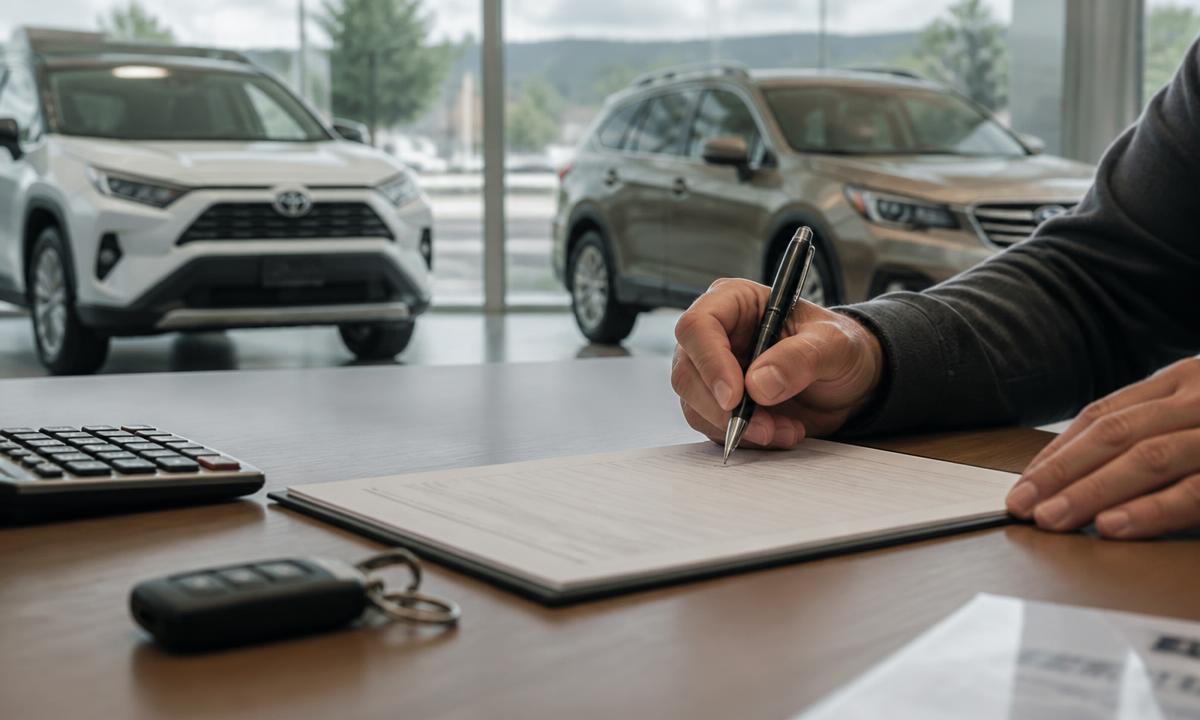
The RAV4 is cheaper to buy. Its $31,900 starting price beats the Outback's $34,995 by about $3,100, and the RAV4 stays less expensive through most of the lineup. The catch is that the cheapest RAV4 is front-wheel drive. Adding all-wheel drive moves the LE to $33,300, which narrows the gap to under $1,700 against an Outback that also includes a larger screen and more ground clearance as standard.
RAV4 vs Outback MPG and Powertrain Comparison
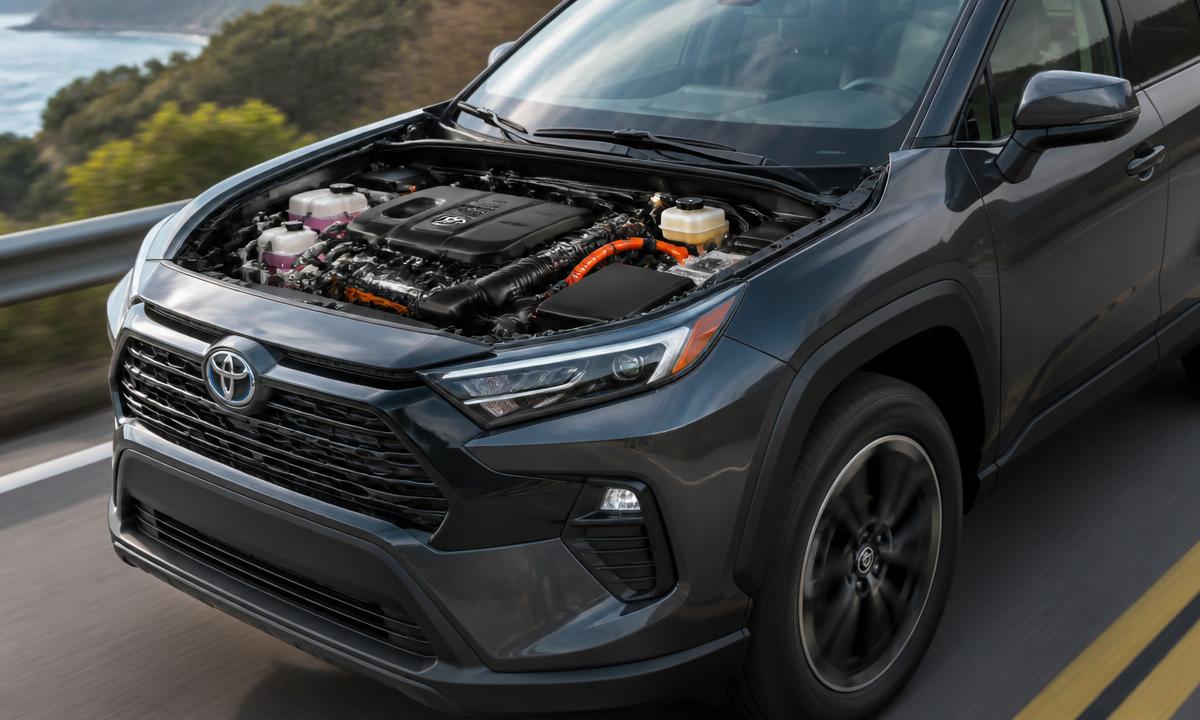
Fuel economy is where the two separate most clearly, and the reason is structural rather than incremental. The RAV4 is electrified across the board and the Outback is not.
The front-wheel-drive RAV4 LE, SE and XLE Premium are EPA-rated at 47 mpg city and 40 mpg highway, or 43 combined. Adding all-wheel drive costs about a mile per gallon, and the off-road-oriented Woodland sits lowest among the hybrids at 41 city, 35 highway and 38 combined.
The Outback's numbers depend on which engine you pick. The 2.5-liter trims return 25 city, 31 highway and 27 combined, the turbocharged Limited XT and Touring XT drop to 21, 29 and 24, and the Wilderness lands at 21, 27 and 23. Cars.com notes that most trims slipped a mile per gallon from the 2025 model because the redesigned body is taller and about 100 pounds heavier. Even the most efficient Outback is 16 mpg combined behind the most efficient RAV4.
The plug-in hybrid widens the gap further. Toyota rates the RAV4 Plug-in Hybrid SE at an EPA-estimated 54 miles of all-electric range with 324 net combined horsepower, more power than the Outback's turbo engine. Range drops on the heavier trims, to roughly 49 miles on the Woodland and 48 on the GR Sport. Note that Toyota's current listing of 54 miles for the SE is higher than the 52-mile figure still shown by several third-party databases, so confirm the number for the exact trim you are shopping. Once the battery is depleted the plug-in runs as a hybrid at about 41 mpg combined, which still beats every gas Outback.
Is the RAV4 More Fuel Efficient Than the Outback?
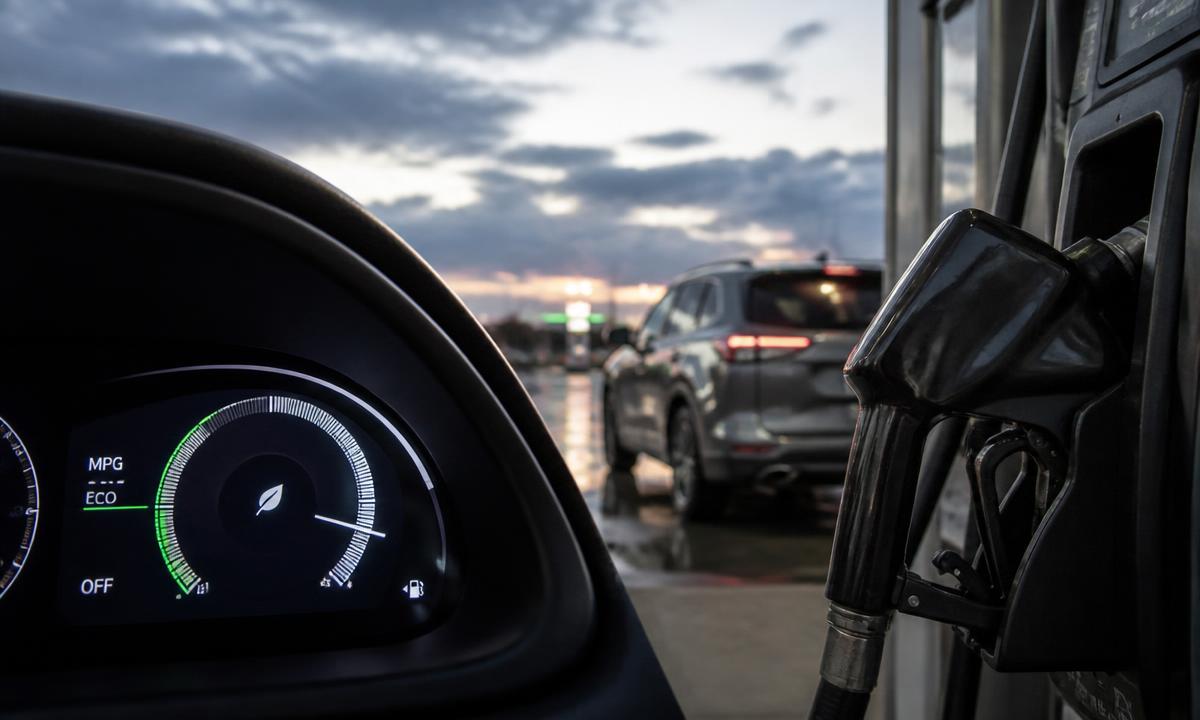
Yes, at every comparable trim level. The 2026 RAV4 is rated up to 43 mpg combined and no version drops below 38, while the 2026 Outback tops out at 27 mpg combined and falls to 23 on the Wilderness. The RAV4 plug-in hybrid's 41 mpg combined in hybrid mode still beats the most efficient Outback before any electric driving is counted.
That gap compounds. Driving 12,000 miles a year at 43 mpg combined uses roughly 279 gallons; the same distance at 27 mpg uses about 444 gallons. That is 165 extra gallons a year for the Outback, so multiply by whatever you currently pay per gallon to get your own annual difference. This is a simple annual-miles divided by EPA-combined-mpg estimate rather than a manufacturer projection, and the real figure moves with the city-highway mix of your driving.
Does the RAV4 Have a Hybrid Advantage?
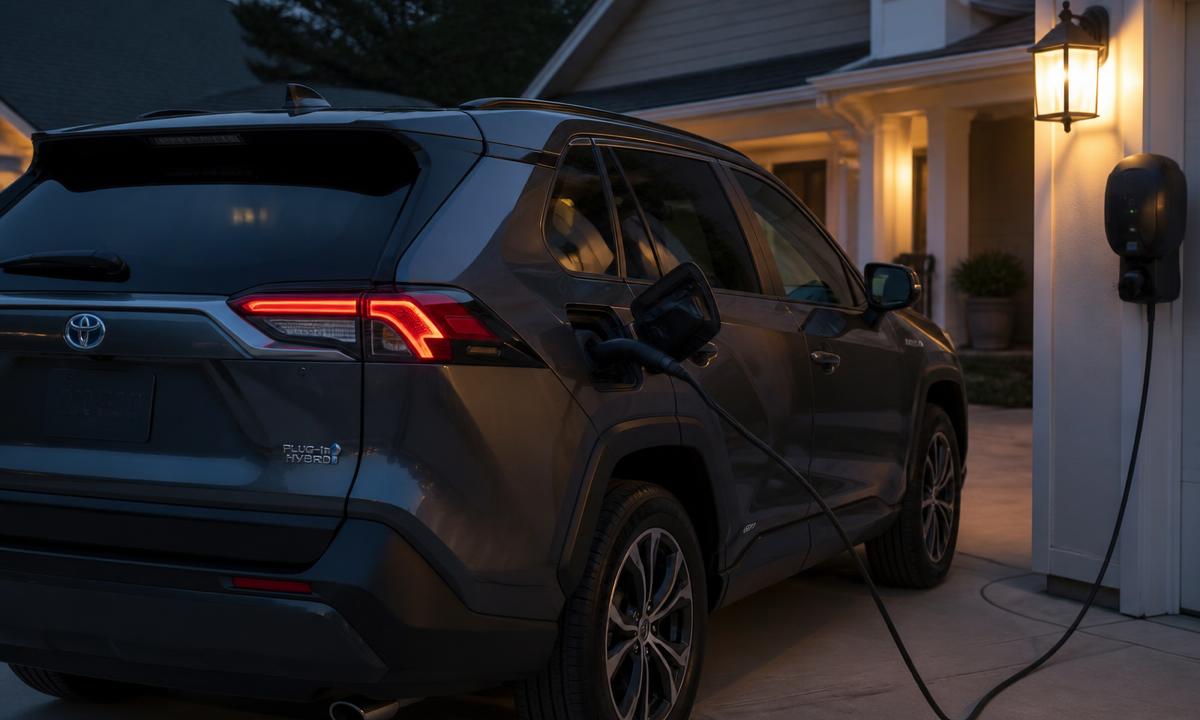
Yes, for most ownership patterns. The standard hybrid needs no charging and asks nothing new of the driver, so it is a straight efficiency gain over the Outback's gas engines with no change in routine. The plug-in hybrid goes further, and a driver whose round trip fits inside its electric range and who charges at home can run mostly on electricity and keep the engine for longer trips.
Charging access is the deciding variable. Without home or workplace charging, a plug-in hybrid carries the weight and price of a battery it rarely uses, and the standard hybrid or the Outback's simpler gas powertrain makes more sense. Toyota limits DC fast charging to the XSE and Woodland plug-in trims.
AWD, Ground Clearance and Off-Road Capability
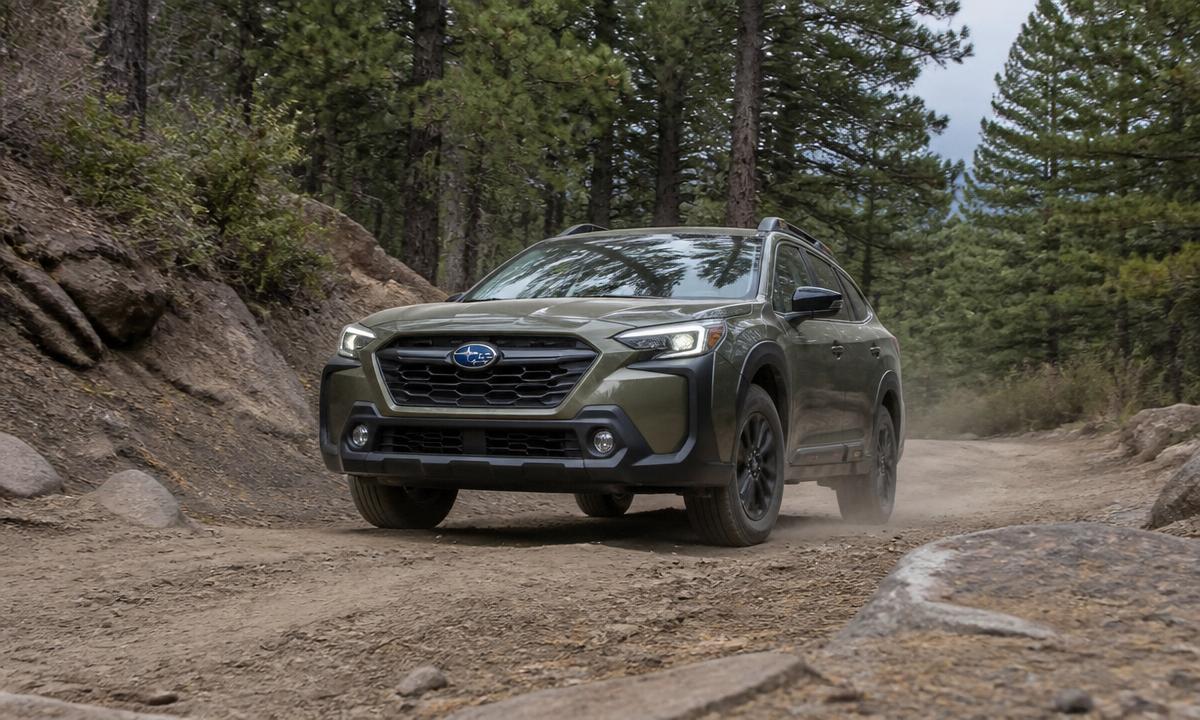
Subaru builds every 2026 Outback with Symmetrical All-Wheel Drive as standard. Toyota treats all-wheel drive as an option on most RAV4 trims, though it is standard on the Woodland and on every plug-in hybrid. For anyone who wants guaranteed all-wheel traction without checking a spec sheet trim by trim, that is a real difference.
Subaru also backs the hardware with dedicated software. X-MODE is standard and optimizes the all-wheel-drive system for slippery surfaces, with Hill Descent Control for steep grades, and the Wilderness adds a dual-function version with separate snow, dirt, deep snow and mud settings. Toyota's equivalent is trim-specific rather than lineup-wide: the Woodland adds all-terrain tires, a multi-terrain monitor and downhill assist control, but there is no comparable multi-surface system across the range.
Ground clearance follows the same pattern. Most RAV4 trims sit at 8.1 inches and the Woodland raises that to 8.5. The Outback starts at 8.7 inches and the Wilderness reaches 9.5. For rutted trails and deep snowpack the Wilderness has a genuine advantage. For gravel roads and an unplowed driveway the two are closer than the marketing implies, and tire choice matters more than the last half-inch.
Towing splits along engine lines. The RAV4 is rated at 1,750 pounds on front-wheel-drive models and the all-wheel-drive LE, rising to 3,500 pounds on other properly equipped all-wheel-drive trims. The Outback tows 2,700 pounds with the 2.5-liter engine and 3,500 pounds with the 2.4-liter turbo, which means the Wilderness, Limited XT and Touring XT all carry the higher rating as standard.
Which Is Better for Snow and Bad Weather?
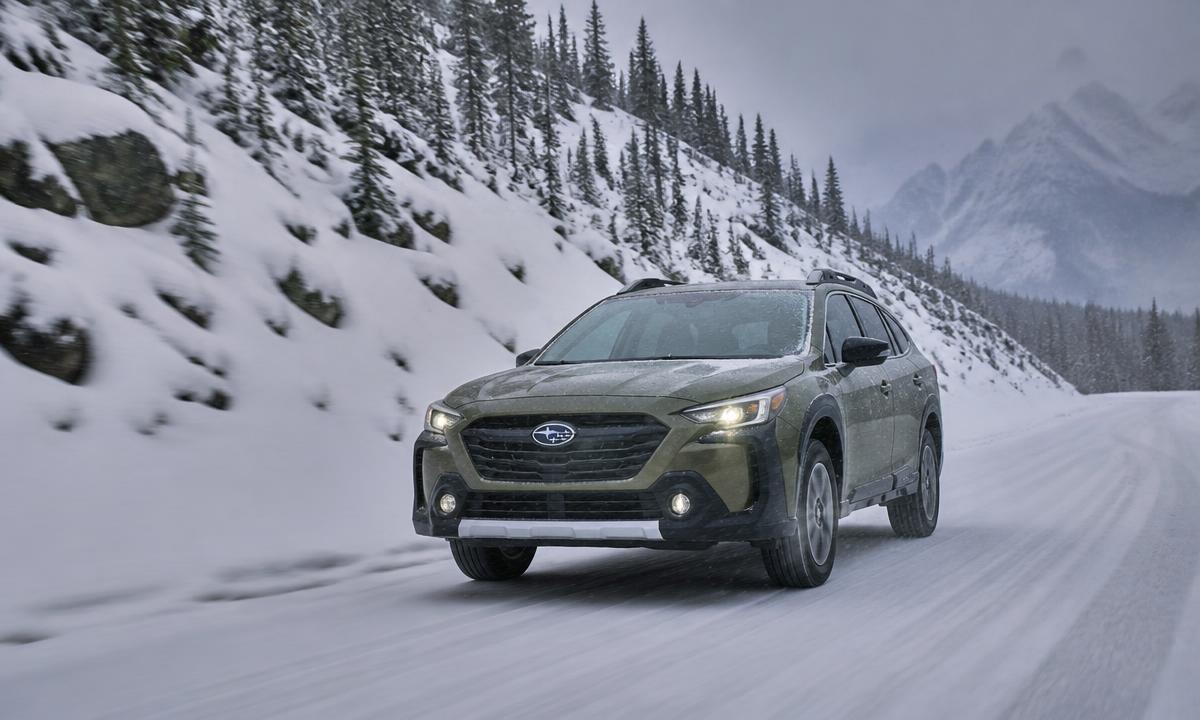
The Outback has the edge for most winter driving. All-wheel drive is standard on every trim, X-MODE with Hill Descent Control is built for low-traction surfaces, and the entry price already includes both. A RAV4 can match that traction, but only in an all-wheel-drive configuration, so buyers need to confirm the drivetrain rather than assume it.
Neither vehicle has been through controlled winter testing for this comparison, so treat drivetrain and traction-mode availability as the deciding factors rather than brand reputation. In consistently snowy regions, winter tires will do more for safety than the inch of ground clearance separating the two.
RAV4 Woodland vs Outback Wilderness
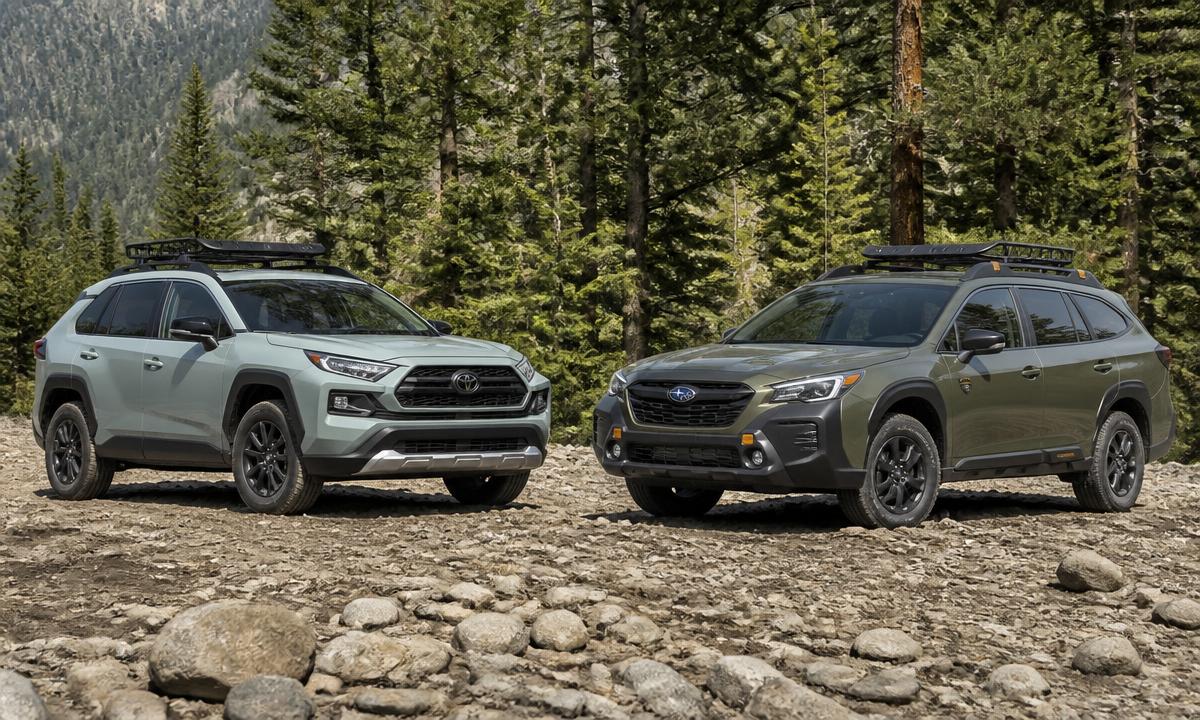
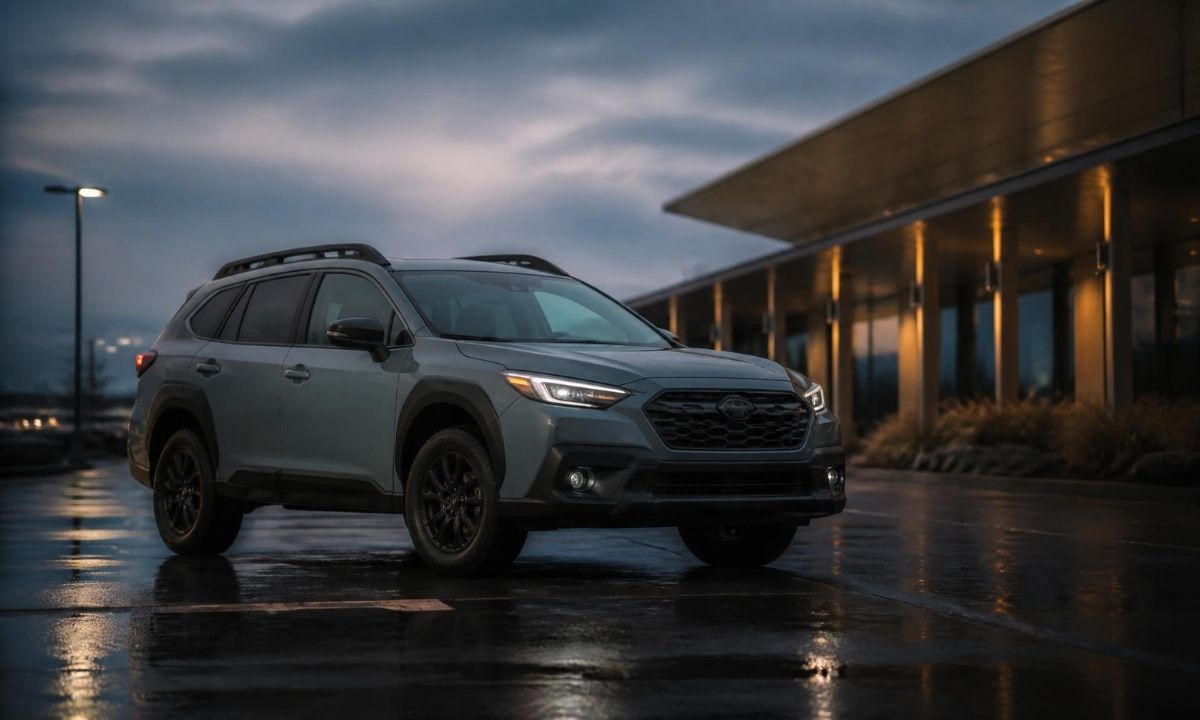
These are the two trims aimed at buyers who leave pavement, and they sit closer together on price than the base models do. The Woodland hybrid starts at $39,900 with standard all-wheel drive, all-terrain tires, 8.5 inches of clearance, a multi-terrain monitor and downhill assist control, and a plug-in hybrid Woodland is offered at a higher price. The Wilderness starts at $44,995 and pairs standard all-wheel drive with the 260-horsepower turbo engine, 9.5 inches of clearance, dual-function X-MODE, electronically controlled dampers and a 3,500-pound tow rating.
The Wilderness is the more capable machine off pavement and the better tow vehicle. The Woodland costs roughly $5,100 less and keeps hybrid fuel economy the Wilderness cannot approach.
Cargo Space, Passenger Room and Everyday Practicality
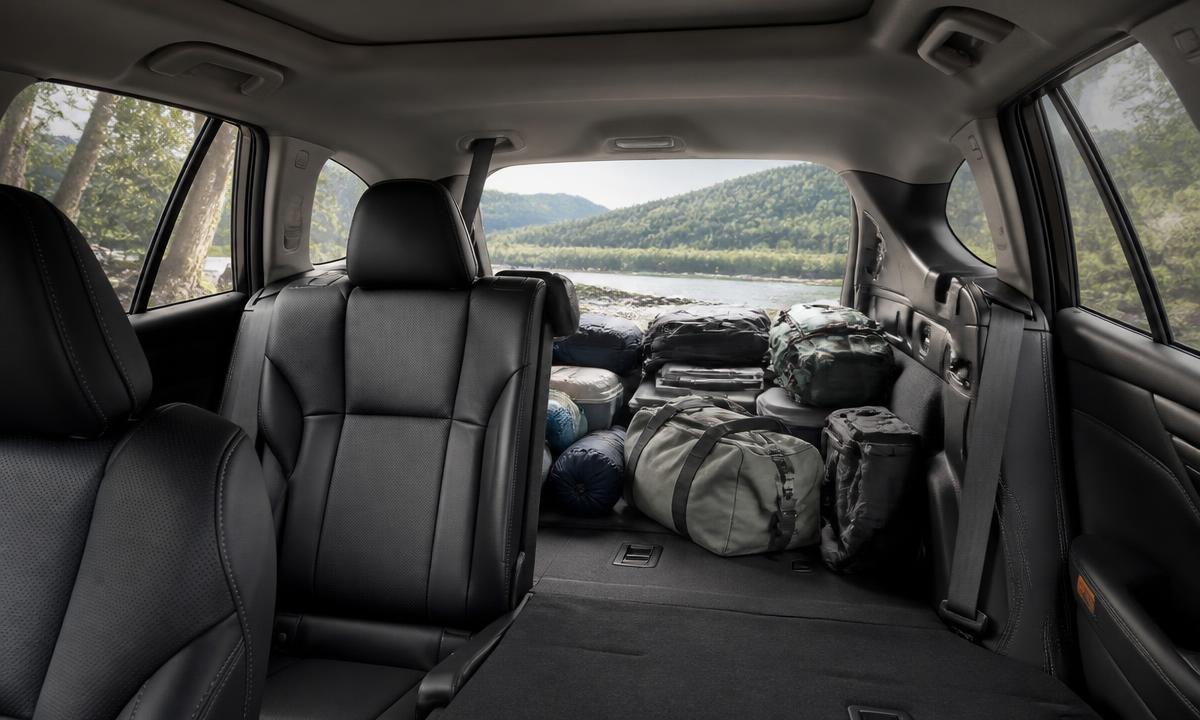
The cargo comparison is less one-sided than the totals suggest. The RAV4 holds 37.8 cubic feet behind its rear seats, more than the Outback's 34.6, so it is the better car for a weekly shop or a boot full of sports kit. Fold the seats and the order reverses: the Outback opens up to 80.5 cubic feet against the RAV4's 70.4.
Passenger space is a clearer win for Subaru. The Outback offers up to 112.3 cubic feet of passenger volume, dropping to 111.1 with a moonroof, while the RAV4 has 98.9. Rear legroom is 39.5 inches in the Outback and 37.8 in the RAV4, a difference tall adults will feel on a long drive but not on the school run.
So families carrying car seats and daily cargo will find the RAV4 adequate and cheaper to run, while households that regularly load camping gear, strollers or bikes get more usable room from the Outback. Neither offers a third row, so anyone needing six seats should look at a different segment.
Safety, Technology and Interior Features
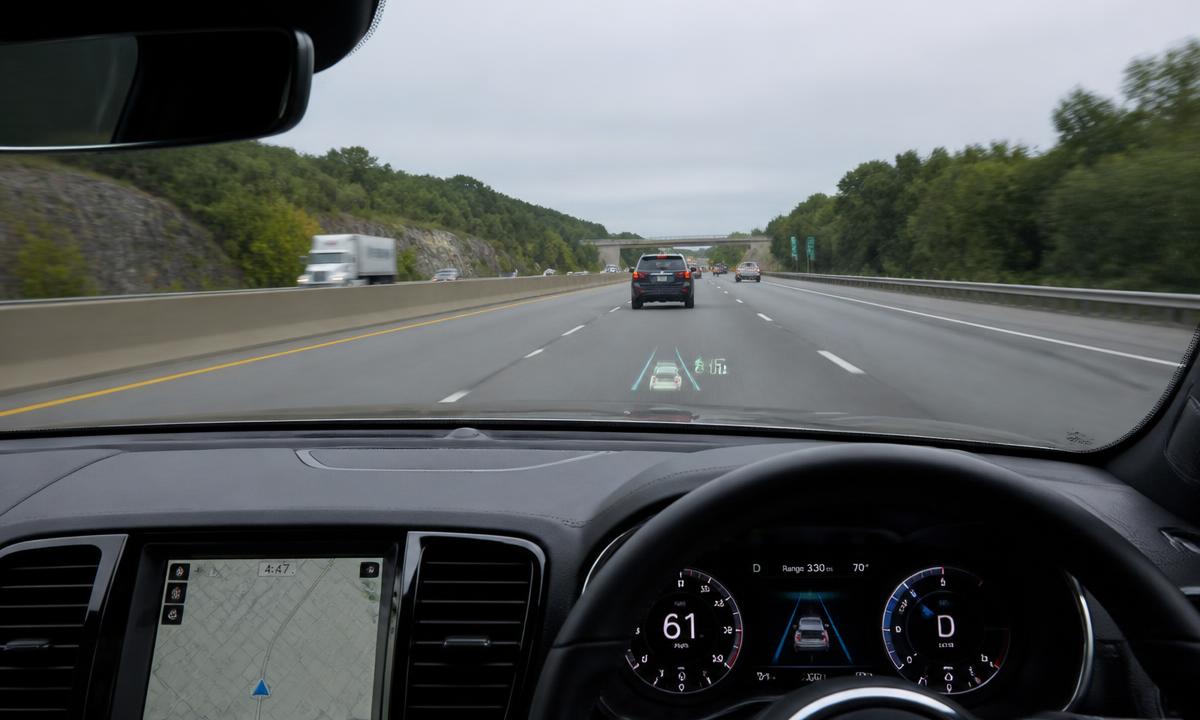
Both come with a full suite of standard driver assistance, but their independent results differ sharply for 2026. Toyota Safety Sense 4.0 is standard across the RAV4 lineup. Subaru's EyeSight is standard on every Outback and was updated for 2026 with a wider-angle camera, automatic emergency steering and haptic steering-wheel alerts, with hands-free highway driving standard on Touring trims.
The independent testing currently favors Subaru. The 2026 Outback is an IIHS Top Safety Pick+, with Good ratings in the small overlap, updated moderate overlap and updated side tests, plus Good headlights on all trims. The redesigned RAV4 holds no 2026 IIHS award. Cars.com reported in August 2026 that no Toyota SUV earned a 2026 Top Safety Pick, mostly because of the updated moderate overlap test, and that the IIHS was still testing the redesigned RAV4 at that point. An award may follow once testing concludes, so check IIHS.org for the current status before you buy.
On technology, both use a 12.3-inch digital gauge cluster as standard. The RAV4 pairs it with a 10.5-inch touchscreen, or 12.9 inches on upper trims. The Outback standardizes a 12.1-inch screen and keeps dedicated buttons and knobs for climate control, which is easier to use while driving than the previous generation's touch-heavy layout.
Which Is Better: Toyota RAV4 or Subaru Outback?
There is no single winner, because the two are optimized for different things. The RAV4 wins on entry price, fuel economy and electrification, including a plug-in option Subaru does not offer here. The Outback wins on standard all-wheel drive, passenger room, maximum cargo, guaranteed towing on turbo trims and its current IIHS Top Safety Pick+ status.
Two caveats apply to both. Newly redesigned models tend to sell close to MSRP with limited negotiating room until inventory builds. And ownership costs differ by powertrain: the RAV4's hybrid hardware adds complexity, though Toyota's hybrid systems have a long reliability record, while the Outback's CVT and turbo engine can feel coarse under hard acceleration, which is the trade for the extra power.
Best Choice for Daily Commuting
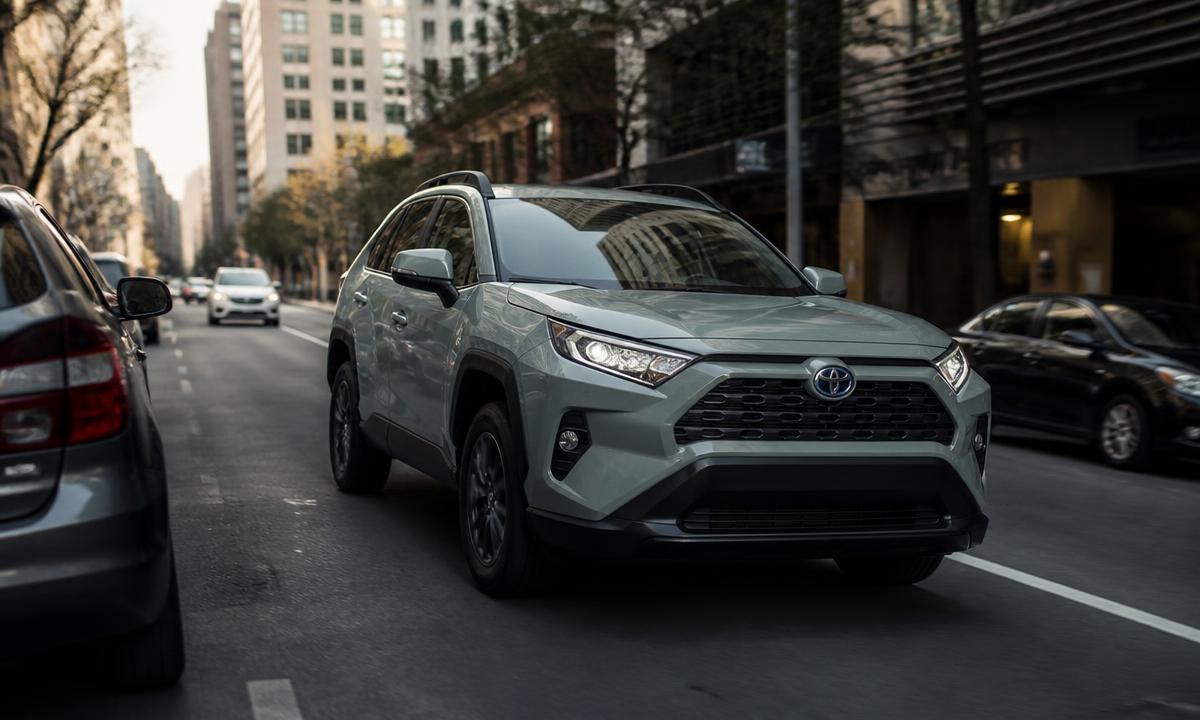
The RAV4 hybrid is the stronger commuter. It beats every Outback configuration on combined mpg, costs less to buy, and its shorter body is easier in tight city parking. Drivers with a short commute and home charging should look at the plug-in hybrid, which can cover most weekday driving on electricity alone.
Best Choice for Families and Road Trips
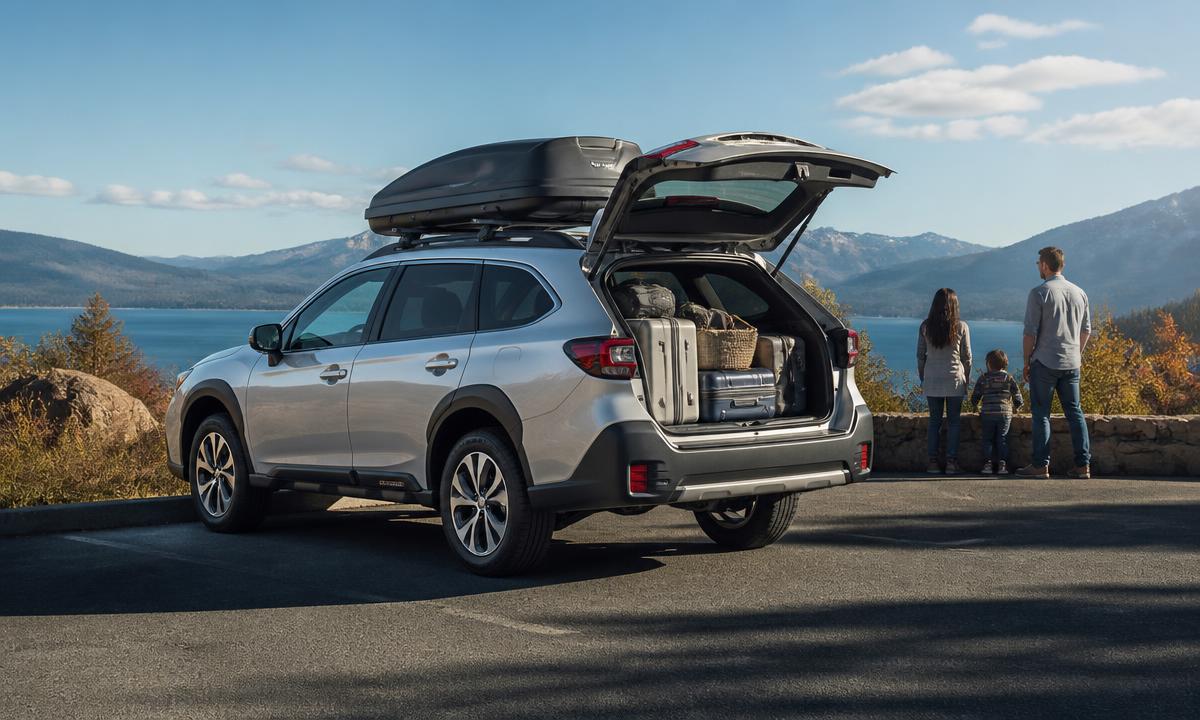
The Outback suits bigger families and frequent road trips, thanks to its extra rear legroom, larger maximum cargo hold and standard all-wheel drive. Families who prioritize running costs, rarely carry bulky loads and want more space behind the rear seats for daily errands may still be better served by the RAV4.
Best Choice for Outdoor and Adventure Use
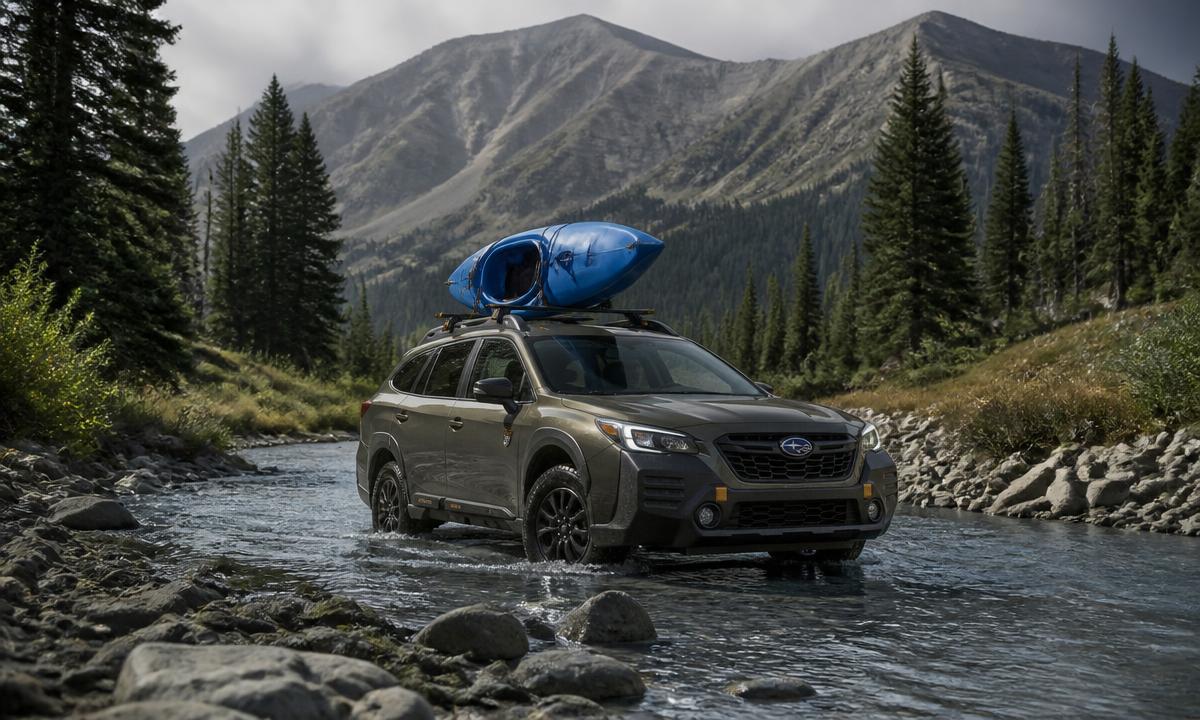
The Outback Wilderness is the pick for genuine off-road use, snow country or regular towing, with 9.5 inches of clearance, dual-function X-MODE and a standard 3,500-pound rating. The RAV4 Woodland is the cheaper and more efficient alternative for gravel roads, light trails and mild winters.
Frequently Asked Questions
Is the Toyota RAV4 better than the Subaru Outback?▾
Neither is better outright. The RAV4 wins on fuel economy, entry price and electrification, while the Outback offers standard all-wheel drive on every trim, more passenger and maximum cargo room, a 3,500-pound tow rating on turbo trims and a 2026 IIHS Top Safety Pick+ award. The right answer depends on whether running costs or space and capability matter more.
Which gets better mpg, the RAV4 or the Outback?▾
The RAV4, by a wide margin. It is EPA-rated up to 47 city and 40 highway, or 43 combined, on front-wheel-drive trims. The Outback tops out at 25 city and 31 highway, or 27 combined, with the 2.5-liter engine and drops to 23 combined on the Wilderness.
Is the RAV4 bigger than the Outback?▾
No. The 2026 Outback is a midsize SUV at 191.7 inches long, about 11 inches longer than the RAV4, with more passenger volume and more maximum cargo space. The RAV4 does hold more behind its rear seats, 37.8 cubic feet against 34.6.
Which is better for off-roading, the RAV4 or the Outback?▾
The Outback Wilderness. It has 9.5 inches of ground clearance against the RAV4 Woodland's 8.5, adds dual-function X-MODE with snow, dirt, deep snow and mud settings, and tows 3,500 pounds as standard. The Woodland is the lighter-duty option at roughly $5,100 less.
Which is cheaper, the 2026 RAV4 or the Outback?▾
The RAV4, at $31,900 against $34,995, both before destination charges. The gap narrows to under $1,700 once you add all-wheel drive to the RAV4 LE, since the Outback includes it as standard. Options, destination and dealer pricing will change the final figure.
Should I buy a RAV4 Hybrid or a Subaru Outback?▾
Choose the RAV4 Hybrid for lower fuel bills, a lower purchase price and a smaller footprint. Choose the Outback for standard all-wheel drive, more room for passengers and bulky cargo, stronger towing on turbo trims and its current top-tier IIHS rating. Charging access should decide whether the plug-in RAV4 is worth its premium.
Key Takeaways
Key Takeaways
- ✓Price: the RAV4 opens about $3,100 lower, but the gap shrinks to under $1,700 once you add all-wheel drive that the Outback includes as standard.
- ✓Fuel: up to 43 mpg combined against 27, a difference of roughly 165 gallons a year at 12,000 miles.
- ✓Space: the RAV4 carries more behind its rear seats, 37.8 cubic feet against 34.6. The Outback wins everywhere else, with 80.5 cubic feet maximum and 39.5 inches of rear legroom.
- ✓Capability: every Outback has all-wheel drive and X-MODE, and turbo trims tow 3,500 pounds. The RAV4 matches the tow rating only on properly equipped all-wheel-drive versions.
- ✓Safety: the Outback is a 2026 IIHS Top Safety Pick+. The redesigned RAV4 was still being tested as of August 2026.
This comparison comes down to priorities rather than an outright winner. If fuel costs, purchase price or electrification top your list, the RAV4 is hard to beat and its plug-in version has no equivalent in the Outback range. If you want all-wheel drive without checking trim levels, room for four adults and their gear, a guaranteed 3,500-pound tow rating or a current IIHS Top Safety Pick+ result, the Outback earns its higher price.
Both are new for 2026, so pricing, incentives and the RAV4's pending IIHS ratings may shift during the model year. Check current listings and the IIHS and NHTSA sites before committing, then drive both back to back with your real commute and cargo load in mind. The numbers narrow the choice; the seat time settles it.
Continue researching the Outback
Continue reading